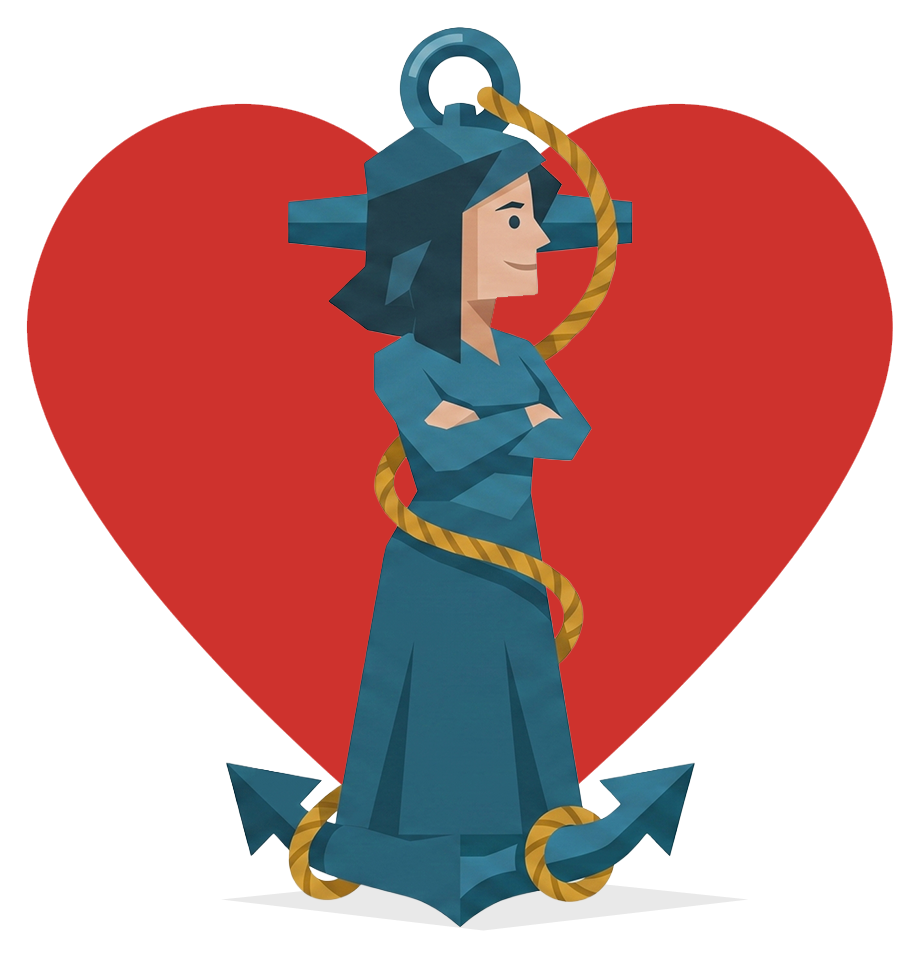
Why Do I Lose Myself in Relationships?
Losing yourself in relationships usually isn't weakness or a sign you love too much. It tends to be a learned survival response, a way of staying safe by keeping the people you depend on happy. Over time, tracking someone else's needs that closely can quietly erode contact with your own.

You start a relationship as yourself: friends you actually see, a weekend that belongs to you, firm opinions about where to eat. Somewhere between the first date and a few months in, that person has thinned out. Your schedule bends around theirs. Plans you used to care about quietly dissolve. You notice you're not sure what you think about a film until you've clocked what they think first. If you've asked yourself why this keeps happening, the answer usually isn't that you're weak or that you loved the wrong way. It's a pattern with a specific logic, and it has a name.
What losing yourself actually looks like
The pattern is hard to catch partly because, from the inside, it feels like love and generosity. A few of the shapes it commonly takes:
Agreeing with an opinion you don't actually hold, to keep the mood easy. Noticing your partner's shift in tone before they've said a word, and rearranging yourself to match it. Dropping hobbies and friendships without quite deciding to. Over-apologizing for things that weren't yours to apologize for. Answering "I don't mind, whatever you want" so often that you genuinely stop knowing what you want.
None of this feels like self-erasure while it's happening. It feels like being easy to love, the kind of low-maintenance partner nobody could complain about. The cost shows up later, usually as a flat, lonely sense that the person your partner is with isn't quite you.
Where the pattern comes from
In attachment and trauma terms, this often maps onto what's called the fawn response. Most people know the fight-or-flight pair. Fawn is a third option the nervous system reaches for when neither fighting nor fleeing was safe. If, early on, a caregiver was unpredictable, easily overwhelmed, or needed managing, a child can learn that the way to stay safe is to become exactly what the other person needs, to attune closely and keep yourself small.
Researchers describe a related pattern as self-silencing, the habit of muting your own needs and opinions to hold a relationship together, which studies have linked to higher rates of depression. Family systems theorists have a term as well, low differentiation of self, for how readily one person's sense of identity dissolves into a partner's. The details differ, but the thread is constant: somewhere you learned that your own needs were a threat to connection, so you set them down.
Part of what makes it hard to see is that it gets praised
One reason this pattern is so sticky is that the world tends to reward it. People who fawn often get called selfless and endlessly easy to be around. You may have been praised for the exact behavior that is costing you. That praise makes the pattern feel like a virtue rather than a wound, which is part of why it can run for years without ever being questioned. Hypervigilance to everyone else's comfort gets mistaken for thoughtfulness, and the exhaustion underneath it stays invisible.

Losing yourself is not the same as loving deeply
It's worth separating two things that get tangled here. You can love someone deeply and stay a whole person while you do it. What's happening in this pattern isn't the depth of your love. It is a safety strategy running underneath it, one that treats disappearing as the price of being kept.
That distinction matters, because as long as losing yourself feels like proof of how much you love someone, there's no real reason to change it. Seeing it instead as an old protective habit, learned when self-erasure genuinely kept you safe, is what makes it possible to hold onto yourself and the relationship at the same time.
Can this pattern change?
Yes, though it tends to be gradual rather than sudden. The therapists who work with this describe recovery as an ongoing process of rebuilding a self that can stay intact inside closeness, often over a couple of years. Even the small early returns of self, after years of erasure, tend to feel significant out of all proportion to their size.
What moves it is not forcing yourself to become more demanding. It usually starts with noticing the pattern as it happens, catching the moment you agree with something you don't believe or feel your own preference vanish, and letting that be information rather than something to override. Attachment patterns are learned, and learned things can be relearned. Research on earned security, including longitudinal work by Glenn Roisman and colleagues, describes people who grew up insecure and built secure functioning as adults.
Seeing your specific version of the pattern
Losing yourself looks different depending on the attachment pattern underneath it. For some people it is near-total shapeshifting, becoming whoever each partner seems to want. For others it runs through caretaking, or through an anxious monitoring of the other person's mood. Same surface, different engine, and what loosens it depends on which one is yours.
If you want to see the specific pattern behind your own tendency to disappear, the free attachment test maps exactly that: where it comes from, what sets it off, and where you sit on the two dimensions that underlie every attachment style. It takes a few minutes, it is not a diagnosis, and it draws on the same research as this article.